TEDxSpeaker · TEDxSanStefano, Alexandria
Facilitation · Conflict Transformation
Look at the conflict together – instead of at each other.
I host spaces where teams and organisations make the unspoken visible — and move forward where conversations keep circling because everyone feels slighted.
Grounded in international peace work
- TEDx Speaker
- HWPL Peace Educator
- Certified xchange Guide
- YPAN — Youth Peace Ambassador Network
- Rotary Peace Fellowship
The third space
Peace is a capability — not the absence of conflict.
Most negotiations stall not on the content but on the emotional layer: on feeling slighted, hidden agendas, and the way people talk under uncertainty. The “third space” opens when a group stops standing against each other and starts looking together at the same image.
Peace is learned decades before war.
How we work together
Three ways into the third space
-
Xchange Facilitation
Structured dialogues and workshops for teams and organisations in change — psychological safety, group dynamics and collective intelligence, in the xchange approach.
Tell me more -
SIM-Translation
My signature method: the emotional layer of a discussion translated into a live image — a “conflict picture” the group can look at together, where words fell short.
Tell me more -
Peace-Education Trainings
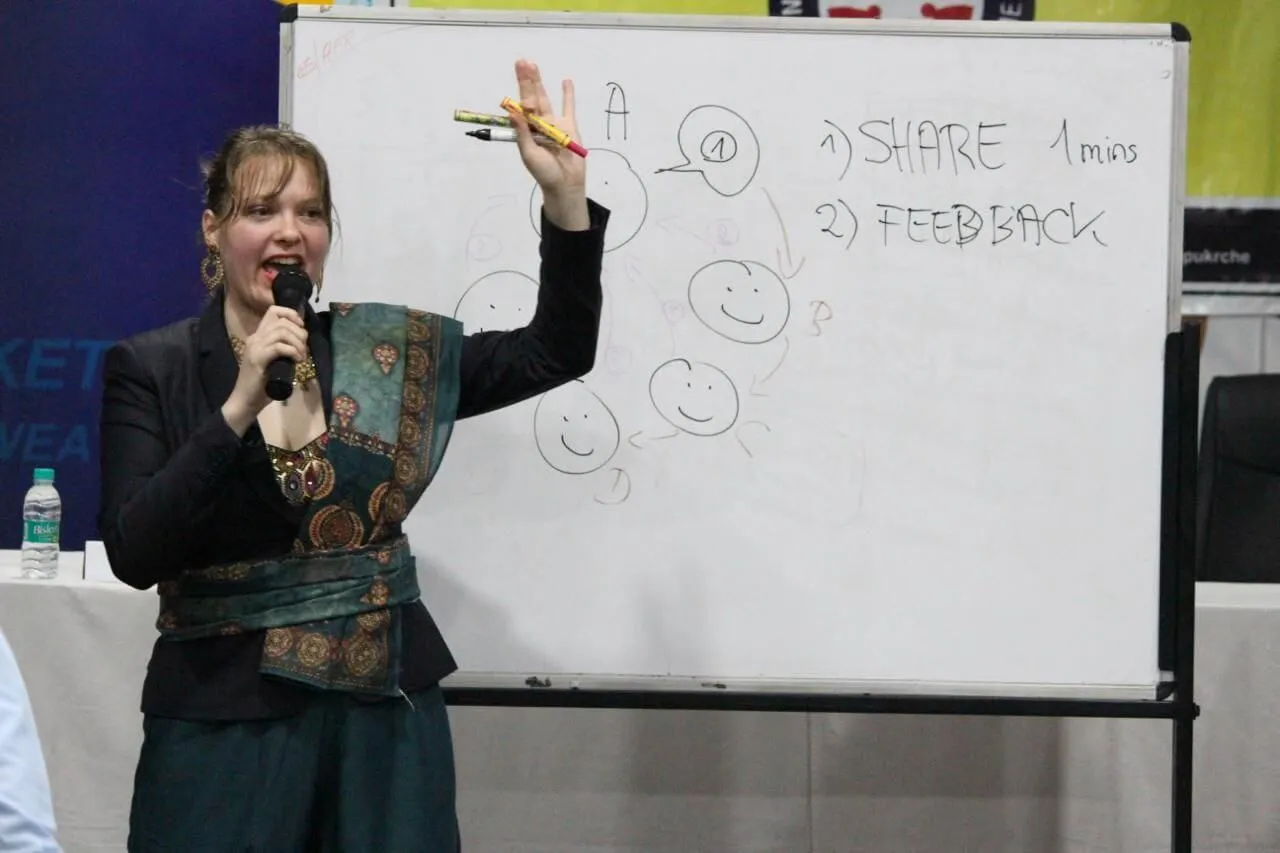
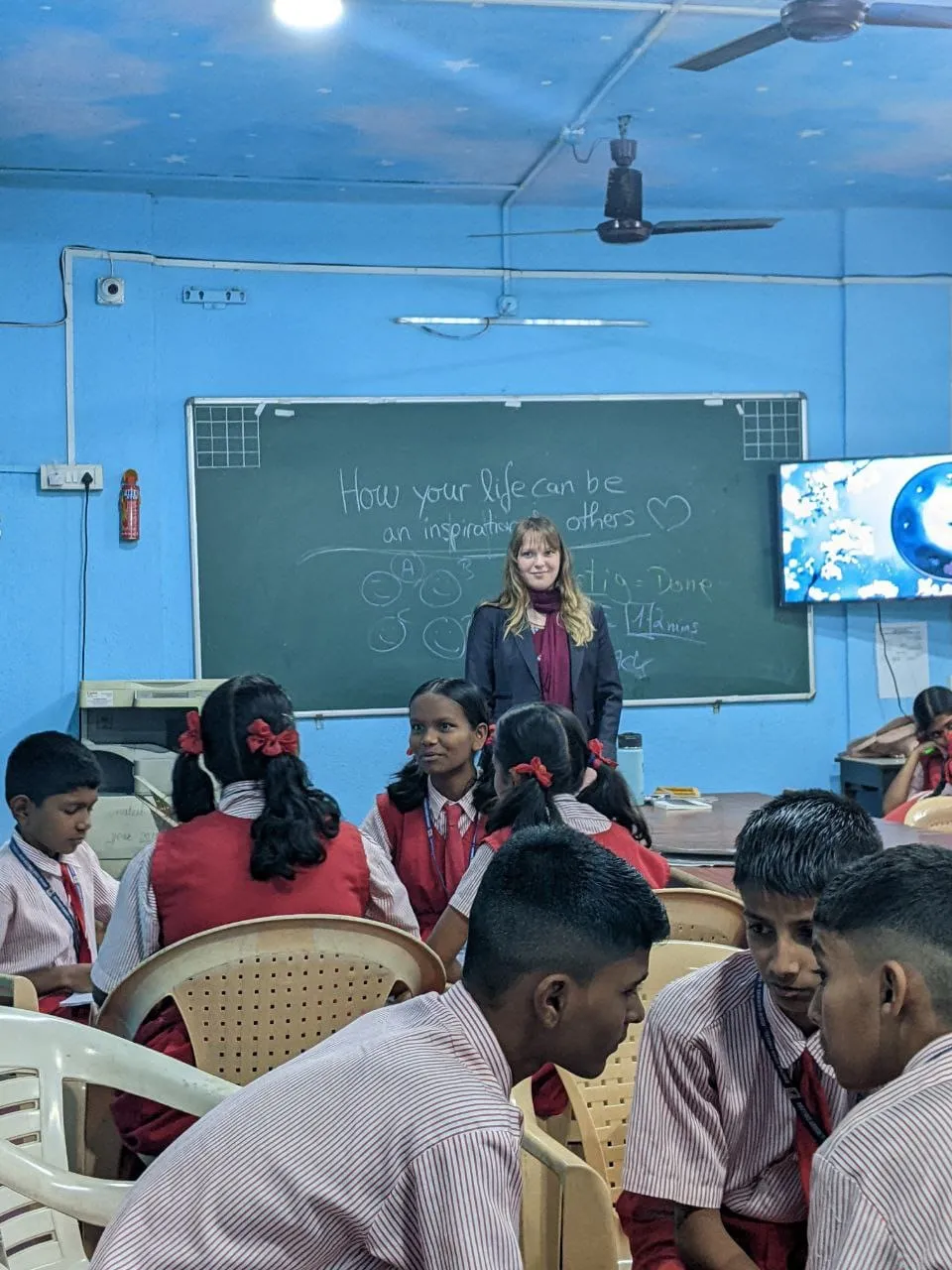
Curriculum-based workshops and keynotes — from teacher trainings to peace-ambassador formats in schools, tested internationally (HWPL).
Tell me more
TEDx · Live proof
On a TEDx stage in Alexandria
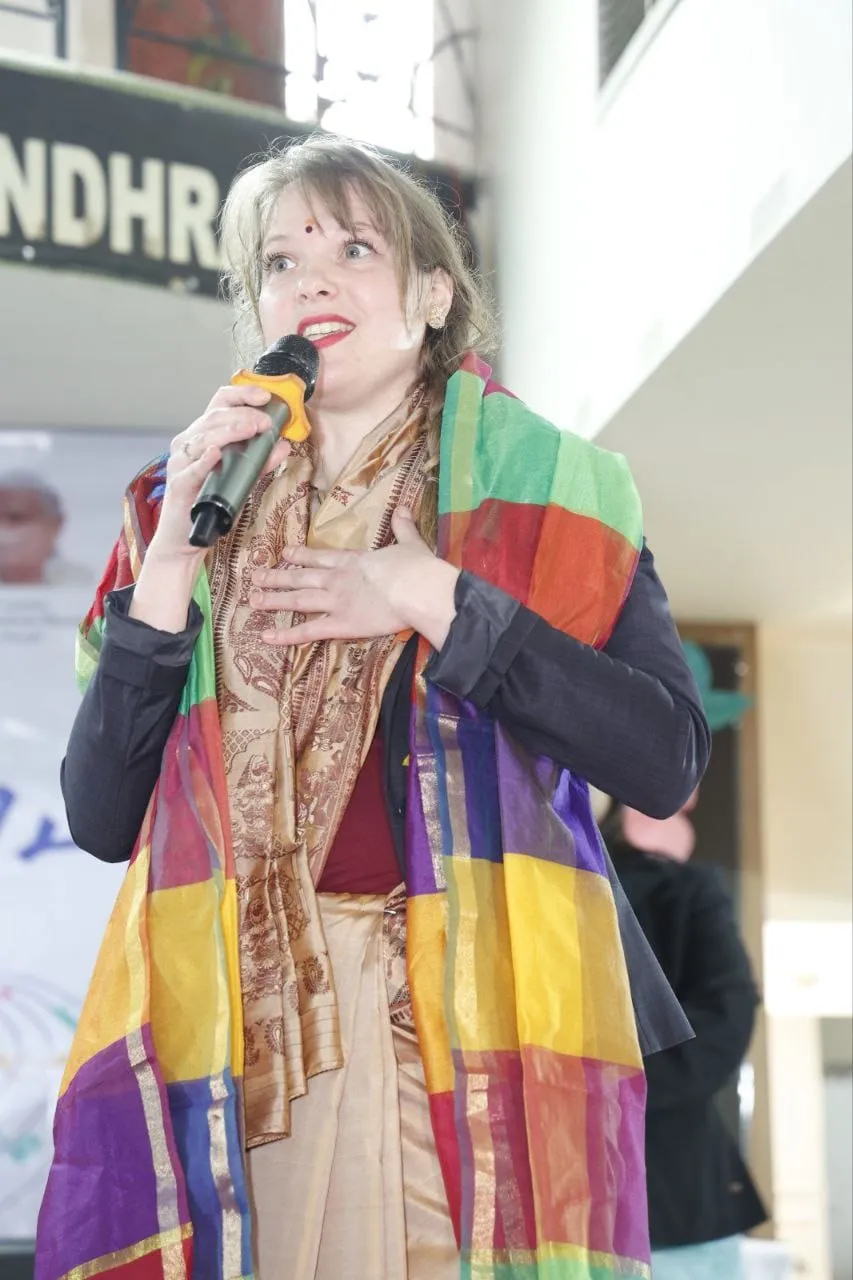
There, in the city that shaped her, Christina argued that belonging isn’t a place you reach — it’s a capacity you carry. That same conviction now sits at the centre of her work: helping groups feel at home enough with each other to look at the hard thing together.
- Belonging is portable — “home” is an inner state, not a location.
- Difference doesn’t threaten belonging: many origins can coexist and still each belong.
- Inner peace is the precondition for outer peace — the seed of her peace work today.
Official TEDx channel · “Feel anywhere at home in the world”. Transcript on request.
Method
SIM-Translation: the conversation becomes observable
Graphic recording visualises information. SIM-Translation (Sound-to-Image) visualises emotion — turning the conflict into an observable object, a “third instance in the room”.
- 01
Translate live
Simultaneously with the discussion, an image emerges that makes connections, tensions and stances visible — free of judgement and manipulation.
- 02
Look together
The group looks at the image together. The conflict is no longer between us — it becomes something we can observe together.
- 03
Work with the image
In dialogue or 1:1 coaching, participants communicate with the conflict picture — on a deeper, human level.
Grounded in intercultural communication (Hall/Hofstede), Nonviolent Communication (Rosenberg), Appreciative Inquiry and the iceberg principle.
Impact
What happens in the room
-
“For the first time we talked about the thing we’d only been fighting over.”
Placeholder · Programme lead (reference to follow)
-
“She holds complexity and creates dialogue across differences.”
Placeholder · Event host (reference to follow)
Selected references: HWPL teacher workshop Mongolia (≈100 participants), peace-ambassador series India, network gathering Berlin.
About
A gardener, a translator, a host — not a hero
Christina Wessendorf is a peacebuilding practitioner, certified facilitator (xchange) and coach. As a member of the global peace organisation HWPL she advances peace education in schools — from Egypt to India, Mongolia and Berlin.
Her 2.5 years in Alexandria became the starting point: intercultural friction raised the question of how collaboration succeeds when words no longer suffice. From that, she developed SIM-Translation.
B.A. Cultural Management (Business & French) · DE / EN / FR / Arabic
Let’s start a conversation.
Tell me about your challenge — and we’ll look together at what becomes possible.
Start a conversationUsually a reply within two working days.